Commercial Roof Replacement: What’s Included in a Complete Roofing System?
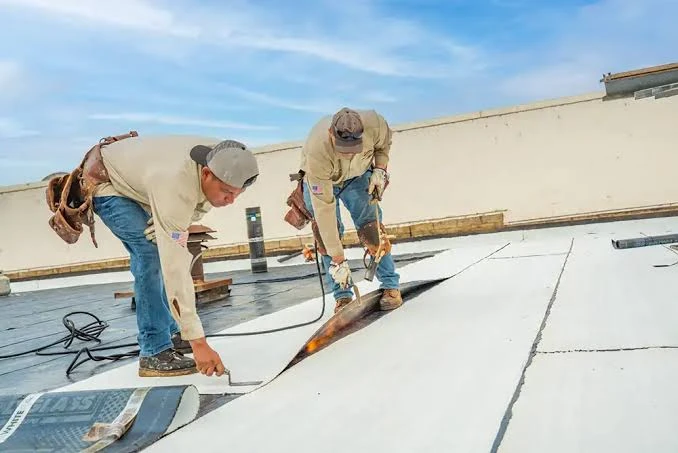
A commercial roof replacement is much more than installing a new roofing membrane. A properly installed flat roofing system consists of multiple layers that work together to protect your building from water, wind, snow, UV rays, and changing temperatures. Replacing every necessary component helps maximize the roof’s lifespan while reducing future maintenance costs.
Roof Inspection
Every commercial roof replacement begins with a complete inspection. Roofing professionals evaluate the condition of the existing membrane, insulation, roof deck, flashing, drains, parapet walls, rooftop equipment, and structural components to determine the proper replacement plan.
Roof Tear-Off
Depending on the condition of the existing roof, contractors may remove one or more layers of old roofing materials. Removing deteriorated roofing allows the roof deck to be fully inspected for hidden moisture or structural damage before installing the new system.
Roof Deck Repairs
Once the old roof has been removed, the roof deck is inspected. Damaged wood, steel, or concrete decking is repaired or replaced as necessary to provide a solid foundation for the new roofing system.
Vapor Barrier (When Required)
Some commercial roofing systems include a vapor barrier to help reduce moisture movement from inside the building into the insulation. Whether one is needed depends on the building design and roofing specifications.
Roof Insulation
Polyisocyanurate (Polyiso) insulation is commonly installed to improve energy efficiency while creating a smooth surface for the roofing system. Multiple layers may be installed to achieve the desired R-value and improve drainage.
Cover Board or Fiberboard
Many commercial roofs include a cover board or fiberboard installed over the insulation. This layer provides additional impact resistance, creates a smoother installation surface, and helps protect the insulation from rooftop traffic and equipment.
Base Sheet
Depending on the roofing system, a mechanically attached or adhered base sheet may be installed before the waterproof membrane. The base sheet serves as another protective layer within the roofing assembly.
Roofing Membrane
The roofing membrane is the waterproof surface homeowners and building owners typically recognize. Common commercial roofing membranes include:
- EPDM Rubber Roofing
- TPO Roofing
- PVC Roofing
- Modified Bitumen Roofing
- Built-Up Roofing (BUR)
The appropriate membrane depends on the building, budget, drainage, and long-term performance goals.
Flashing
New flashing is installed around:
- HVAC units
- Pipe penetrations
- Skylights
- Curbs
- Roof edges
- Walls
- Expansion joints
- Parapets
Proper flashing is one of the most important parts of preventing future leaks.
Roof Drains and Scuppers
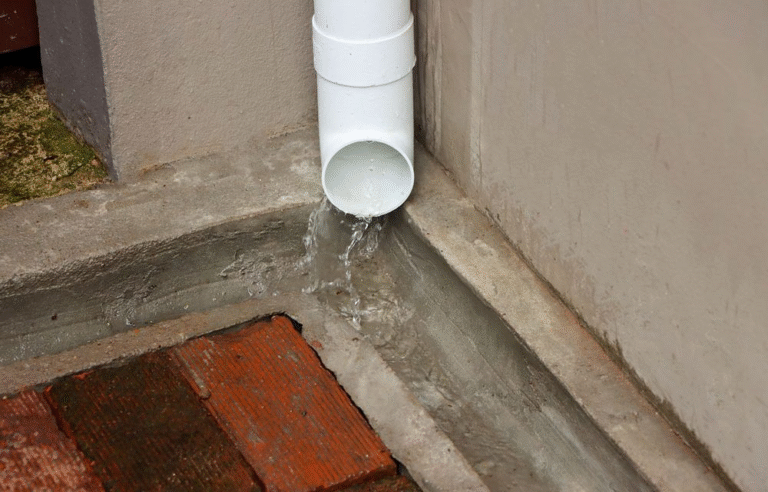
Roof drains, scuppers, overflow drains, and drainage systems are inspected and repaired or replaced if necessary to ensure water leaves the roof efficiently.
Edge Metal and Coping
Perimeter edge metal and coping caps protect the edges of the roof while helping secure the roofing membrane against high winds.
Expansion Joints
Large commercial buildings often include expansion joints that allow the structure to move with changing temperatures. These joints are inspected and replaced when necessary during a roof replacement.
Sealants
Professional-grade roofing sealants are applied where required around flashing details, penetrations, and edge components to provide additional weather protection.
Rooftop Equipment
Contractors work around HVAC units, exhaust fans, vents, and mechanical equipment, ensuring each penetration is properly flashed and sealed.
Final Inspection
After installation, the completed roofing system is thoroughly inspected. Contractors verify membrane seams, flashing details, drainage, edge metal, rooftop penetrations, and overall workmanship before the project is considered complete.
Cleanup
Professional commercial roofing contractors finish every project by removing debris, cleaning the work area, inspecting drains, and leaving the property clean and safe for building occupants.
A commercial roof replacement is an investment in the long-term protection of your building. Every layer—from the roof deck and insulation to the cover board, flashing, and finished membrane—plays an important role in creating a durable roofing system. At S&K Commercial Roofing, we understand that quality comes from installing every component correctly, ensuring your commercial roof is built to withstand years of harsh weather while protecting your business, employees, and valuable assets.