How Social Media Is Changing The Study Habits of UK Students in 2026
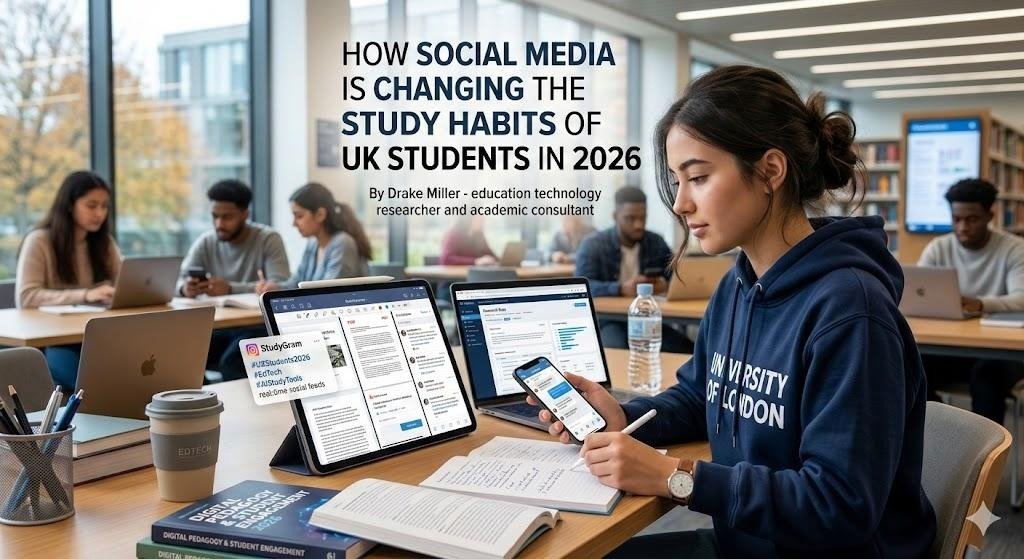
The lecture halls and sixth-form common rooms of 2026 look remarkably different from those of just a few years ago. If you walk into a library at the University of Manchester, a quiet study zone at UCL, or even a Year 13 revision session in a Birmingham college today, you won’t just see students with highlighters and heavy textbooks. Instead, you’ll encounter a sophisticated ecosystem of “StudyTok” livestreams, AI-integrated Discord servers, and tablets buzzing with real-time Notion updates.
Social media is no longer just a distraction to be “managed”—it has become the primary infrastructure for how UK students, from GCSE level to Post-Graduate research, learn, collaborate, and even procrastinate. As we navigate the academic landscape of 2026, here is how the digital world is fundamentally rewriting the student experience.
1. The Rise of ‘Edutainment’ and Micro-Learning
In 2026, the “death of the long-form lecture” is a common talking point in UK Higher Education. Students are increasingly turning to short-form video platforms like TikTok and Instagram Reels to supplement their degrees. This “micro-learning” trend has exploded, where complex quantum physics theories, A-Level Biology processes, or architectural principles are condensed into 60-second “explainer” videos.
For many, these snippets serve as the “hook” that makes a difficult topic accessible before they dive into their core reading. However, as an education researcher, I’ve noted this shift presents a unique challenge: the “illusion of competence.” Watching a brilliantly edited TikTok on organic chemistry can make a student feel they understand the topic, even if they haven’t yet mastered the underlying mechanics. For instance, high-stakes History or Politics students often realize that a viral clip isn’t enough to help them understand how to write a DBQ essay through a comprehensive lens, which requires deep document analysis that social media simply can’t replicate.
2. The Integration of Social Media and Agentic AI
By 2026, the line between social media and Artificial Intelligence has blurred into total invisibility. Platforms like Snapchat and Instagram now feature highly sophisticated AI assistants that do more than just chat; they act as personalized, 24/7 tutors.
Today’s students are using these social-integrated AI tools to:
- Summarize long PDF research papers shared in WhatsApp group chats.
- Generate mock exam questions based on the specific wording of UK exam boards.
- Organize group project deadlines through automated bots that sync with Google Calendar.
While this efficiency is revolutionary, it has sparked a massive debate in UK schools and universities about academic integrity. Educators are moving away from traditional take-home essays, focusing instead on “authentic assessment”—oral exams and live problem-solving. For those struggling to keep up with these rapidly shifting requirements and the complexity of AI-era grading rubrics, many turn to professional essay help at Myassignmenthelp.com to navigate the nuances of referencing and academic formatting in a high-pressure environment.
3. Digital Body Doubling: The 24/7 Virtual Library
One of the most positive shifts in 2026 is the mainstreaming of “Digital Body Doubling.” Since the post-pandemic era, the feeling of isolation during intense revision periods—especially during the dreaded “May-June Exam Season” in the UK—has been countered by “Study With Me” livestreams.
Whether it’s a silent 12-hour stream on YouTube or a focused Discord “Pomodoro Room,” UK students are using social media to create a sense of accountability. Being “watched” by a virtual community helps students stay off their phones (ironically) and stick to their schedules. This has turned studying from a solitary chore into a collective, social event that spans time zones. For a student in London, knowing that 500 other people are currently “in the zone” on a Twitch stream provides the psychological boost needed to finish that final chapter of notes.
4. The “Search Engine” Pivot: TikTok over Google
For the 2026 student cohort, Google is often the second choice. When looking for “how to reference a journal in Harvard style” or “best quiet study spots in Edinburgh,” students are heading straight to TikTok or Reddit.
The preference for human-verified, peer-led information is at an all-time high. A student trusts a 19-year-old’s “vlog” about their Law degree at Durham University more than they trust a university’s official prospectus. This has led to a more “democratic” flow of information, but it also means students must be more critical than ever about the accuracy of the advice they consume.
5. The “Digital Detox” as a Competitive Edge
Interestingly, 2026 has seen a powerful counter-movement: the “Social Media Fast.” As the mental health impact of “infinite scrolling” and “academic comparison culture” becomes better understood, a segment of high-achieving students is adopting “Monk Mode.”
Using apps that lock social media during peak study hours (9 AM – 5 PM), these students are treating “deep focus” as a luxury skill. In a competitive UK job market, the ability to concentrate without the dopamine hit of a notification is becoming a significant differentiator. Graduates entering high-pressure fields like Medicine, Law, and Engineering are increasingly vocal about their “unplugged” routines.
6. Community-Led Peer Support and the “Hidden Curriculum”
University-specific subreddits and Discord servers have officially replaced the traditional “Student Union” noticeboard. These platforms provide a space for radical honesty that official channels can’t match.
Students share “leaked” tips on which modules have the hardest exams, which lecturers provide the best feedback, and where to find the best student discounts in cities like Bristol or Leeds. This peer-to-peer ecosystem provides a vital safety net. If a student misses a lecture due to illness, they don’t just email the tutor; they check the “Year 2 Bio-Med” Discord for the community-shared Notion notes.
Frequently Asked Questions
Q.1 Is social media making it harder for UK students to concentrate?
It’s a double-edged sword. While “infinite scroll” platforms like TikTok can shorten attention spans, the 2026 trend of “Digital Body Doubling” shows that students are actually using these platforms to stay more focused through community accountability.
Q.2 Which social media platform is best for UK university revision in 2026?
For quick explanations, TikTok (StudyTok) is unbeatable. For deep-dive collaboration and sharing lecture notes, Discord has become the gold standard for UK student communities. Career networking and placement year advice, LinkedIn remains essential.
Q.3 How are UK universities dealing with AI and social media in assignments?
Many institutions, including members of the Russell Group, are moving toward “In-Person Authenticated Assessments.” This includes more viva-voce (oral) exams and supervised practical tasks to ensure the student’s work hasn’t been overly managed by social-integrated AI bots.
Q.4 Can”StudyTok” really replace traditional textbooks?
Not entirely. While short videos are excellent for grasping difficult concepts initially, UK exam boards like Pearson Edexcel and AQA still require the depth of knowledge found in core texts. Social media should be viewed as a “supplement,” not a “replacement.”
Conclusion: A Double-Edged Sword
Social media in 2026 is a paradox. It provides the tools for unprecedented collaboration and instant access to global knowledge, yet it demands a level of self-discipline that previous generations never had to master.
For UK students, the goal is no longer to “quit” social media, but to curate it. Success in 2026 means knowing exactly when to use the tool, and exactly when to put it down.
About the Author: Drake Miller
Drake Miller is a London-based educational consultant and digital literacy advocate with over 12 years of experience in the UK Higher Education sector. A frequent contributor to ed-tech forums and a former advisor for student success initiatives, Drake specializes in how emerging technologies—from AI to social media—impact the academic performance of Gen Z and Gen Alpha students. When he isn’t researching the evolution of the “virtual classroom,” Drake works with academic support platforms to help bridge the gap between traditional curriculum requirements and modern digital study habits.