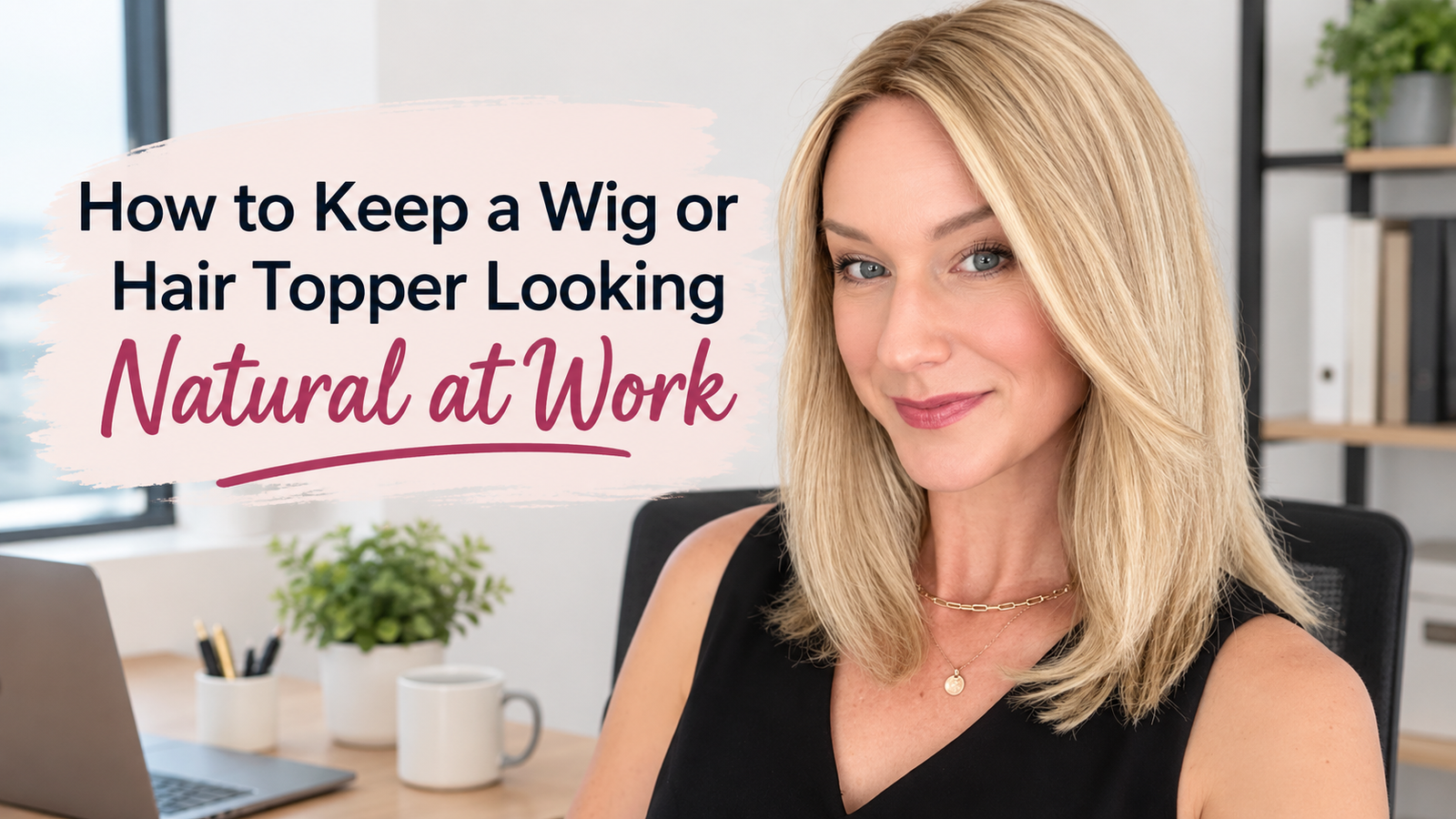
How to Keep a Wig or Hair Topper Looking Natural at Work
Wearing a wig or hair topper to work should feel effortless—not like something you have to think about all day. Office lighting, close conversations, and long hours at your desk can make small differences in your hairline, color, or density more noticeable.
For women experiencing thinning hair or localized hair loss, hair toppers for women can be a practical way to add coverage and volume while keeping much of their natural hair visible. The key is choosing the right piece and making sure it blends naturally with your own hair.
Here are the most important details to consider for a polished, natural-looking office hairstyle.
Start With the Right Hair Topper or Wig
The right hair solution depends on the area you want to cover.
A hair topper is generally designed to add coverage and volume around areas such as the part, crown, or top of the head while allowing your existing hair to remain visible. A wig, on the other hand, provides full-head coverage and allows you to create an entirely different hairstyle.
If you still have sufficient hair around the thinning area, a topper may offer a more seamless transition because it can be blended directly with your own hair.
When choosing among hair toppers for women, consider:
- The size and location of your thinning area
- Your natural hair color
- Your hair texture
- Your preferred parting
- The amount of volume you need
- How you normally style your hair
A good match will make the styling process much easier from the beginning.
Choose a Natural-Looking Hairline
The hairline is one of the first details people notice when looking closely at a wig or topper.
For a natural appearance, avoid creating an overly straight or dense front. Lace-front designs can help create a softer transition between the hairpiece and your skin, while a properly positioned topper can blend into the surrounding hair.
If necessary, leave a few soft strands around the face rather than making the entire front perfectly uniform. Natural hair usually has slight variation in density and direction.
Match the Color and Texture Carefully
Color matching is particularly important when wearing a topper because your own hair remains visible.
Instead of matching only your roots, compare the topper with the mid-lengths and ends of your hair. Your hair may contain highlights, lowlights, gray strands, or natural variation, so a completely flat color may actually be harder to blend.
Texture matters just as much.
If your natural hair is wavy, a perfectly straight topper may stand out. Likewise, adding a highly textured topper to straight hair may create an obvious difference.
For a more cohesive result, style both your natural hair and topper together.
Consider Human Hair Toppers for Greater Styling Flexibility
For women who frequently style their hair or want more flexibility, human hair toppers can be an option worth considering.
Because human hair can be styled similarly to natural hair, it can be easier to create a consistent texture between the topper and your own hair. Depending on the construction and care instructions, you may be able to use heat styling tools to create waves, straighten the hair, or adjust the overall shape.
This flexibility can be particularly useful for professional hairstyles because you can change your look without making the topper appear overly styled.
However, human hair also requires regular care. If you choose a human hair topper, follow the recommended washing, conditioning, drying, and styling routine to maintain its appearance.
Blend Your Topper With Your Natural Hair
Once the topper is securely attached, avoid styling it separately from your own hair.
Instead:
- Position the topper where you normally part your hair.
- Secure the clips or attachment system.
- Bring some of your natural hair around the edges.
- Gently comb the two layers together.
- Style your natural hair and topper as one hairstyle.
This is especially important around the sides and front, where differences in texture or volume can become more visible.
If you use heat styling, work with sections that contain both your natural hair and topper hair whenever appropriate. This can help create more consistent movement.
Pay Attention to Office Lighting
A hairstyle that looks natural at home may appear slightly different under bright office lighting.
Before leaving home, check your hair in several environments if possible:
- Natural daylight near a window
- Normal indoor lighting
- Bright overhead lighting
Look at the front, sides, part, and overall silhouette. Don’t only look directly into the mirror—turn your head and check how the hair moves.
Pay particular attention to shine. Excessive oils or styling products can make a hairpiece appear noticeably different from natural hair under strong lighting.
Keep the Density Natural
More volume does not always mean a more natural result.
If a topper is significantly fuller than the hair around it, the difference can become obvious. For an everyday office hairstyle, a density that complements your existing hair will generally be easier to blend.
The goal is not to create maximum volume. It is to create a balanced hairstyle that looks like it naturally belongs to you.
Make Sure Your Hairpiece Stays Secure
A natural-looking hairstyle can quickly become distracting if the wig or topper moves throughout the day.
For wigs, adjust the straps or use an appropriate grip or other attachment method to achieve a secure but comfortable fit.
For toppers, make sure the clips are positioned securely without pulling excessively on your natural hair.
Before heading to work, try turning your head, looking down, walking around, and moving naturally. If the piece stays in place during normal movement, you are less likely to need adjustments later.
Choose an Office-Friendly Hairstyle
Simple hairstyles often work best in professional settings.
Depending on your hairpiece and personal style, you can try:
- Soft waves
- A smooth bob
- Straight hair with face-framing pieces
- A low ponytail
- A simple half-up style
Avoid creating excessive volume or an overly rigid finish. A little natural movement can make the overall hairstyle look more realistic.
Final Thoughts
A natural-looking wig or hair topper does not have to be complicated. The most important factors are a suitable base, realistic density, accurate color and texture matching, proper placement, and comfortable attachment.
For women looking for hair toppers for women, the right choice should fit both their hair-loss needs and everyday lifestyle. Human hair toppers can provide additional styling flexibility, while the right construction and density can make a topper much easier to blend into your natural hair.
Most importantly, your office hairstyle should allow you to focus on your work—not constantly worry about your hair.