How Dirty Burners Affect Efficiency and Energy Bills
Your furnace might not be broken—but it could be slowly costing you more money every month without you realizing it. One of the most overlooked issues in home heating systems is dirty burners. When burners become coated with dust, soot, or debris, they quietly reduce efficiency, increase energy consumption, and place unnecessary strain on the entire system.
The frustrating part is that your furnace will often keep running, so the problem can go unnoticed for a long time. But over weeks and months, that small buildup can translate into higher utility bills, uneven heating, and premature wear on critical components. Understanding how and why this happens is the first step toward preventing it.
What Furnace Burners Actually Do
Furnace burners are the heart of the heating process. Their job is to mix fuel—usually natural gas or propane—with air and ignite it in a controlled way. This creates a steady, consistent flame that heats the heat exchanger, which then warms the air circulated throughout your home.
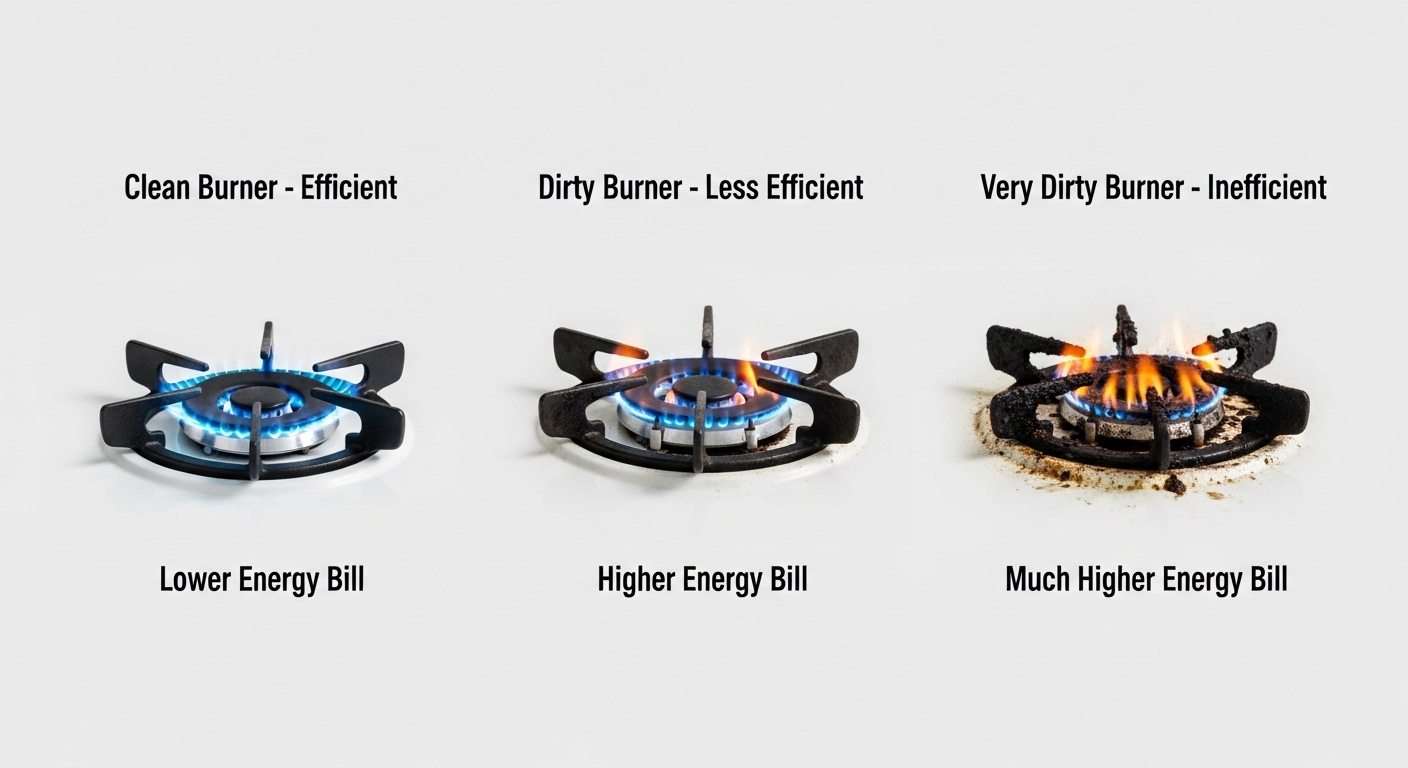
When everything is working properly, the flame burns cleanly and efficiently, typically with a strong blue color. This indicates complete combustion, meaning the furnace is extracting as much usable heat as possible from the fuel.
However, when burners are dirty or partially clogged, that balance is disrupted. The flame may become uneven or weak, combustion becomes less efficient, and more fuel is required to produce the same amount of heat. The system compensates by running longer cycles, which increases energy usage and accelerates wear.
How Burners Get Dirty Over Time
Burners don’t suddenly become dirty overnight. Instead, buildup happens gradually as the furnace operates season after season. Several everyday factors contribute to this process:
Dust and airborne particles are constantly drawn into the system, even with filters in place. Over time, some of these particles bypass filtration or accumulate in areas with lower airflow, including the burner assembly.
Soot can form when fuel does not burn completely. This incomplete combustion may be caused by improper air-to-fuel ratios, aging components, or restricted airflow.
Dirty or clogged air filters reduce the amount of clean air entering the system. When airflow is restricted, combustion quality suffers, increasing the likelihood of residue buildup.
Seasonal shutdown periods also play a role. During warmer months when the furnace is not in use, dust can settle and harden on components, which then affects performance when the system is turned back on.
These factors combine slowly, meaning homeowners often don’t notice anything wrong until efficiency has already dropped significantly.
How Dirty Burners Lower Efficiency
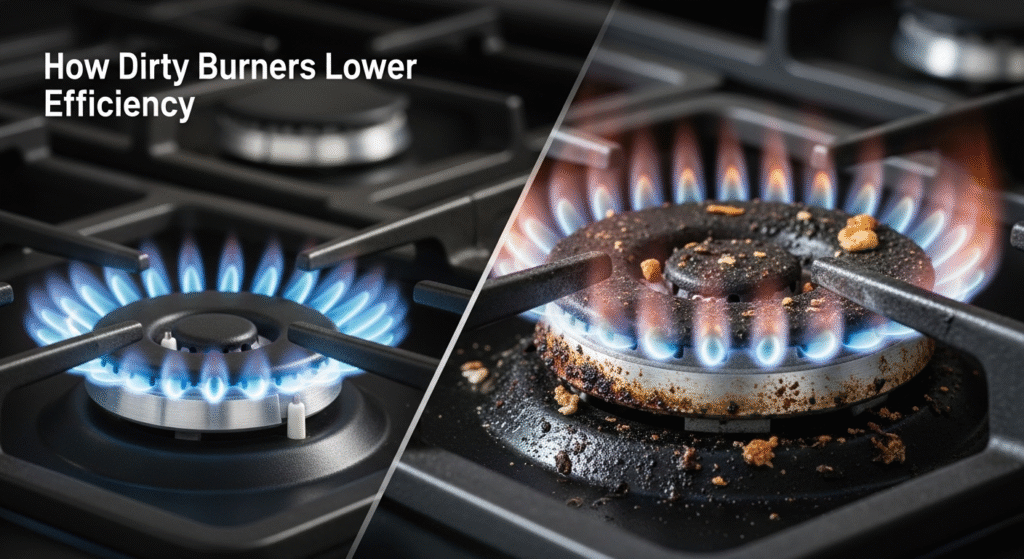
Efficiency in a furnace depends heavily on clean, controlled combustion. When burners are dirty, the flame cannot form properly, which triggers a chain reaction of inefficiencies.
One of the first signs is an irregular flame pattern. Instead of a steady blue flame, you may see flickering or yellowing, which indicates incomplete combustion. This means fuel is not being fully converted into heat, wasting energy in the process.
As efficiency drops, the furnace compensates by running longer cycles. It takes more time to reach the temperature set on your thermostat, and in some cases, the system may cycle on and off more frequently than normal.
This extended operation increases wear on key components such as the blower motor, igniter, and heat exchanger. Essentially, the furnace is forced to work harder for the same result, which reduces its overall lifespan.
Another important factor is heat transfer efficiency. Dirty burners produce uneven flames, which leads to uneven heating of the heat exchanger. This inconsistency further reduces performance and contributes to energy waste.
The Impact on Your Energy Bills
When a furnace becomes less efficient, the financial impact shows up gradually in your utility bills. Even if your thermostat settings remain unchanged, your system may be consuming significantly more fuel to achieve the same level of comfort.
In practical terms, this can result in noticeably higher monthly heating costs during the colder months. Many homeowners mistakenly attribute these increases to colder weather or higher utility rates, when in reality, the furnace itself is operating inefficiently.
Over the course of an entire heating season, this wasted energy can add up substantially. In some cases, a relatively simple issue like dirty burners can increase heating costs by a measurable percentage, especially in older systems or homes with inconsistent maintenance habits.
Warning Signs to Watch For
Dirty burners often reveal themselves through subtle but consistent warning signs. Recognizing these early can help prevent larger problems down the line.
A common indicator is a flame that appears yellow, orange, or flickering instead of steady and blue. This often signals incomplete combustion and reduced efficiency.
You may also notice uneven heating throughout your home. Some rooms might feel warmer than others, even when the thermostat is set correctly. This can happen when the furnace struggles to distribute heat consistently due to inefficient burner operation.
Unusual smells when the furnace starts up can also be a sign of buildup or incomplete combustion. While brief odors at startup can be normal, persistent or strong smells should not be ignored.
Another major clue is an unexplained increase in energy bills. If your usage habits haven’t changed but your heating costs have risen, reduced furnace efficiency may be the cause.
Why Maintenance Matters More Than Most Homeowners Realize
Regular maintenance is the most effective way to prevent dirty burners from becoming a serious problem. While filters are often replaced periodically, internal components like burners are frequently overlooked until issues arise.
Routine maintenance includes cleaning the burners, checking airflow, inspecting ignition systems, and ensuring the air-to-fuel ratio is properly balanced. These steps help maintain efficient combustion and prevent unnecessary strain on the system.
Keeping the area around the furnace clean also helps reduce dust intake. Even small environmental changes, such as reducing dust buildup in utility rooms, can contribute to better long-term performance.
Professional inspections are especially important because they can identify early signs of buildup or mechanical issues that are not visible to the average homeowner.
For homeowners searching for furnace maintenance houston tx, working with trained technicians ensures that the system is properly cleaned, inspected, and optimized for efficiency before peak heating demand arrives.
When Cleaning Isn’t Enough: The Need for Repairs
In some cases, dirty burners may indicate a deeper issue within the furnace system. For example, repeated buildup could suggest airflow problems, aging components, or improper combustion settings.
If burners are heavily soiled or if the furnace continues to operate inefficiently after cleaning, repairs may be necessary. This could involve replacing worn parts, adjusting gas pressure, or addressing ventilation issues.
Delaying repairs can lead to more serious consequences, including heat exchanger damage or system failure. That’s why timely professional evaluation is important when warning signs persist.
If your system is already showing performance issues, scheduling furnace repair houston tx can help restore proper function and prevent more expensive breakdowns later.
Seasonal Preparation and Long-Term Efficiency
One of the best ways to avoid burner-related issues is to treat furnace care as a seasonal responsibility rather than a reactive one. Preparing your system before heavy winter use ensures it runs efficiently when you need it most.
Before heating season begins, it’s a good idea to replace filters, clear surrounding areas, and schedule a professional inspection. This helps ensure burners are clean and ready for consistent operation.
Long-term efficiency also depends on consistency. Systems that receive regular maintenance tend to last longer, perform better, and cost less to operate over time compared to neglected systems.
Final Thoughts
Dirty burners may seem like a small issue, but their impact on efficiency, comfort, and energy costs can be significant. Because the problem develops slowly, many homeowners don’t realize how much performance they are losing until bills rise or heating becomes inconsistent.
The good news is that this is a highly preventable issue. With routine maintenance, proper airflow, and timely inspections, your furnace can continue operating efficiently throughout the heating season.
For homeowners in need of professional support, Valderrama A/C & Refrigerator provides reliable service to keep heating systems running safely and efficiently. Whether you need preventative care or emergency service, addressing issues early is the best way to protect both your comfort and your energy budget.